
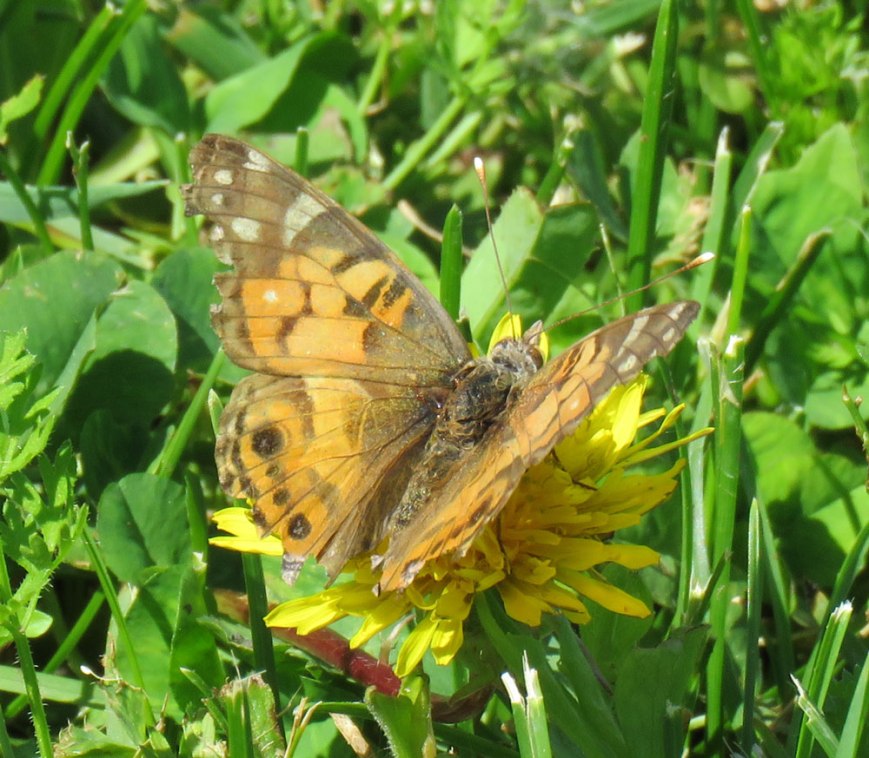
Painted Lady butterflies are found in Douglass Park starting in early spring. (May, 2016)
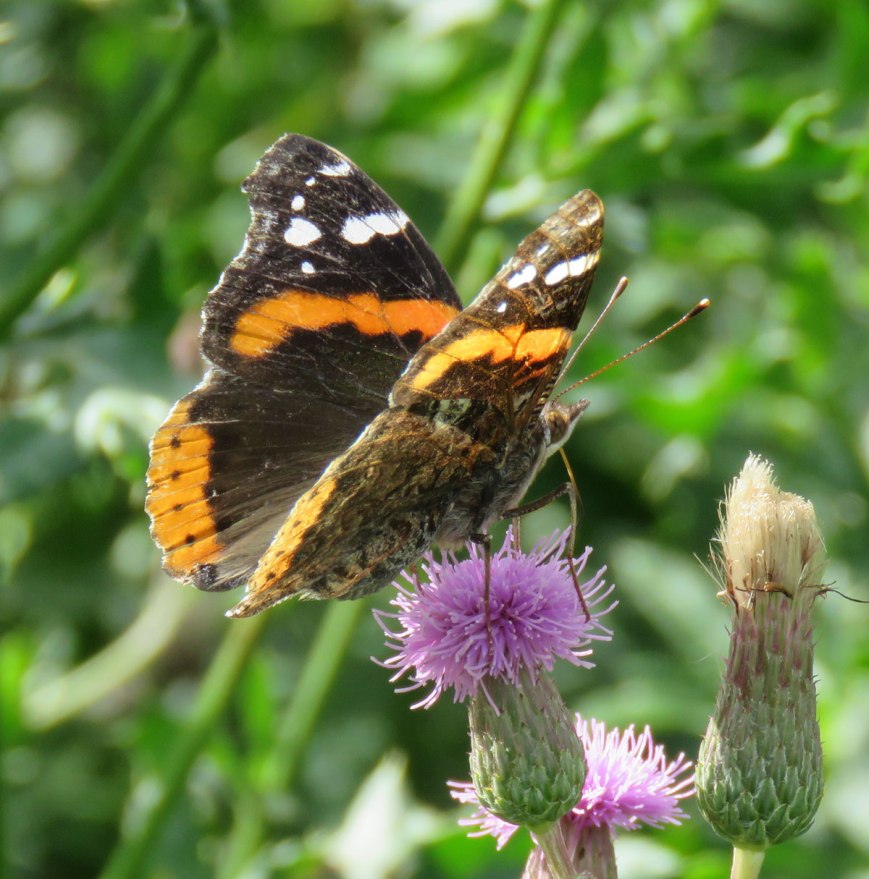
Red Admiral butterflies sip nectar from thistle and other flowers in the Douglass Park sanctuary. (July, 2016)
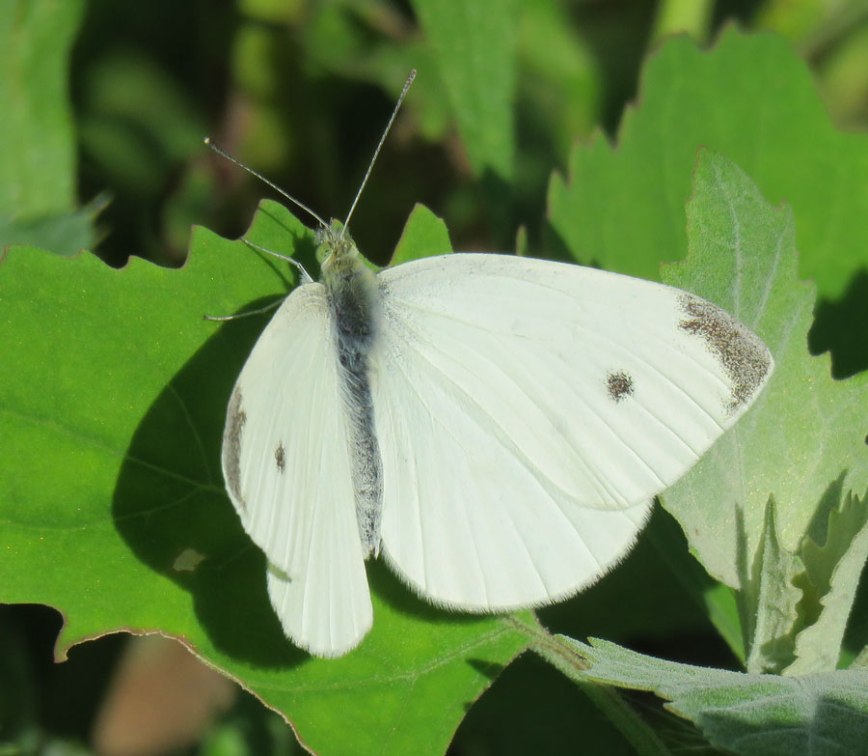
Cabbage White butterflies are probably the most common butterfly in the park. (July, 2016)
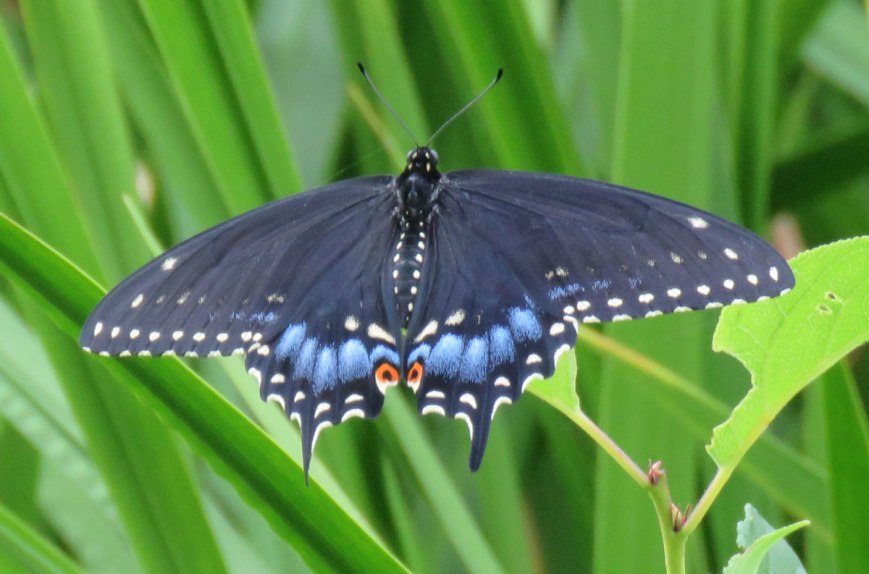
Black Swallowtail butterflies are not as common in the park, so they are always a special find. (July, 2016)
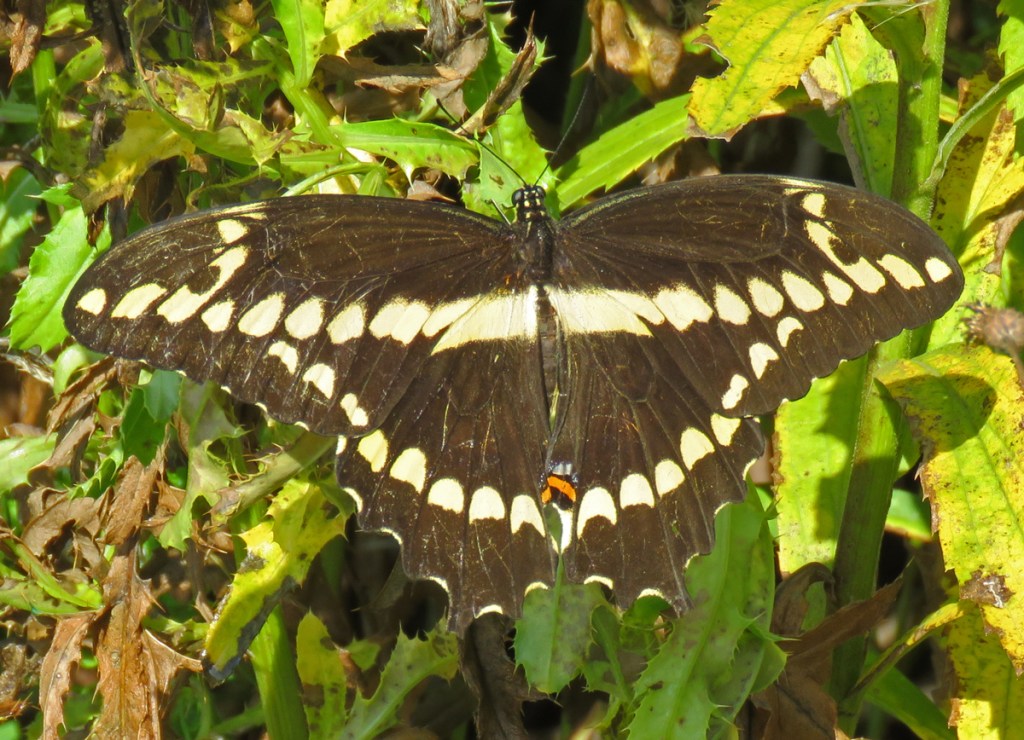
Here’s the only Giant Swallowtail I’ve seen in Douglass Park, found on August 15, 2017
.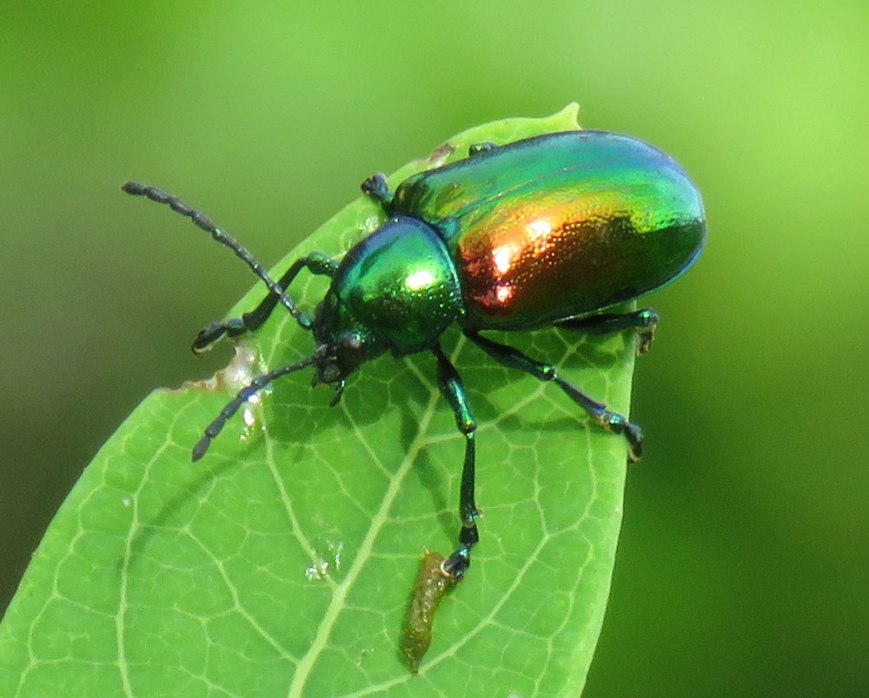
Dogbane Leaf Beetles are metallic jewels that look more appropriate for a tropical rainforest than an urban park.
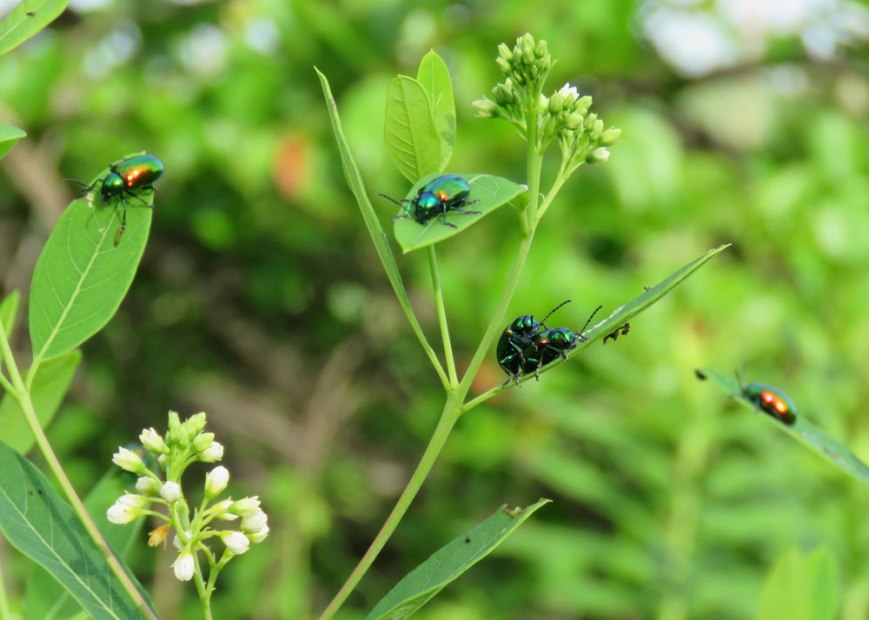
In early July we found dozens of Dogbane Leaf Beetles feeding on dogbane in meadow and prairie patches in the Douglass Park sanctuary.
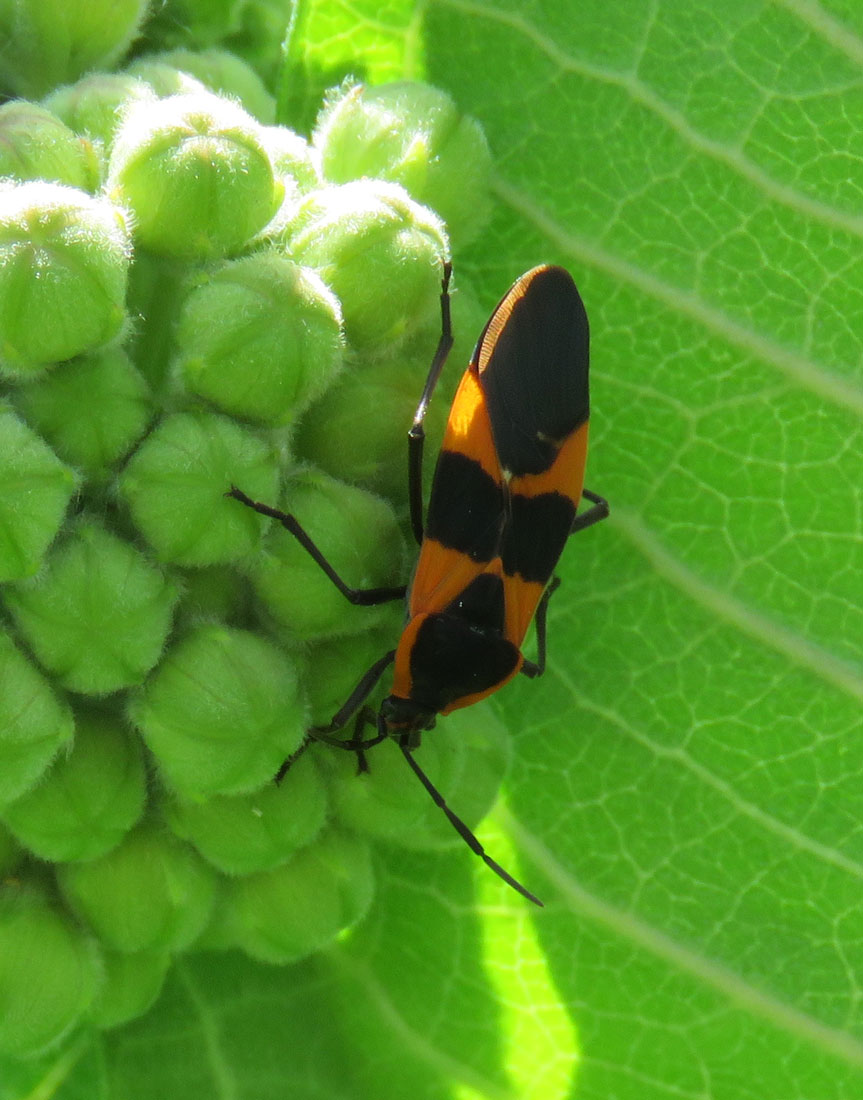
Large Milkweed Bugs taste bad to birds because they feed on nasty tasting milkweed plants. Their bold orange-and-black pattern warns birds to stay away!
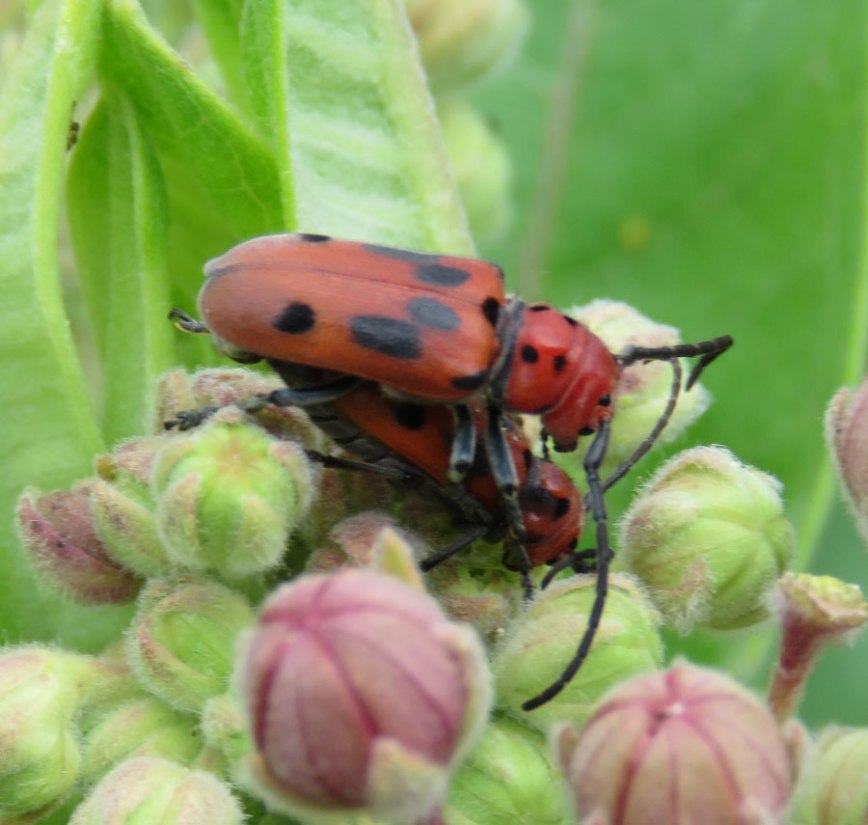
The red-and-black pattern of Red Milkweed Beetles also warns potential predators of their bad taste. Some people call these longhorn beetles Singing Milkweed Beetles, because they squeak when you pick them up.
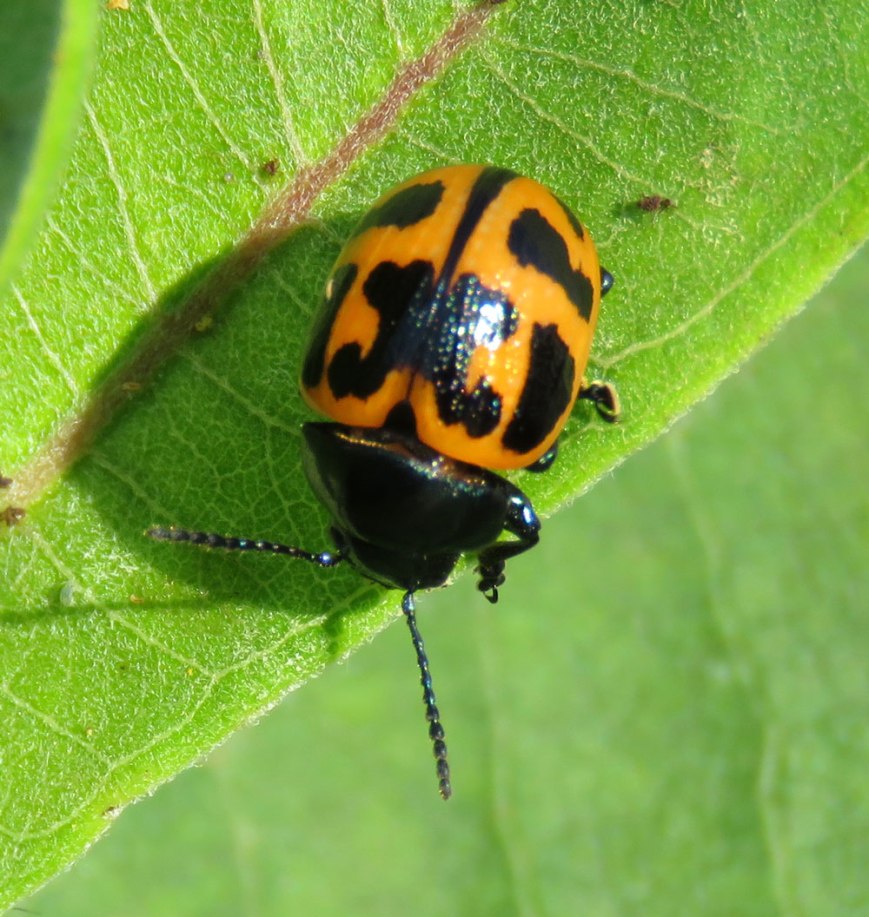
The last of our nasty tasting insects is this Milkweed Leaf Beetle, with another variation of the bold orange-and-black warning pattern. (August, 2016)
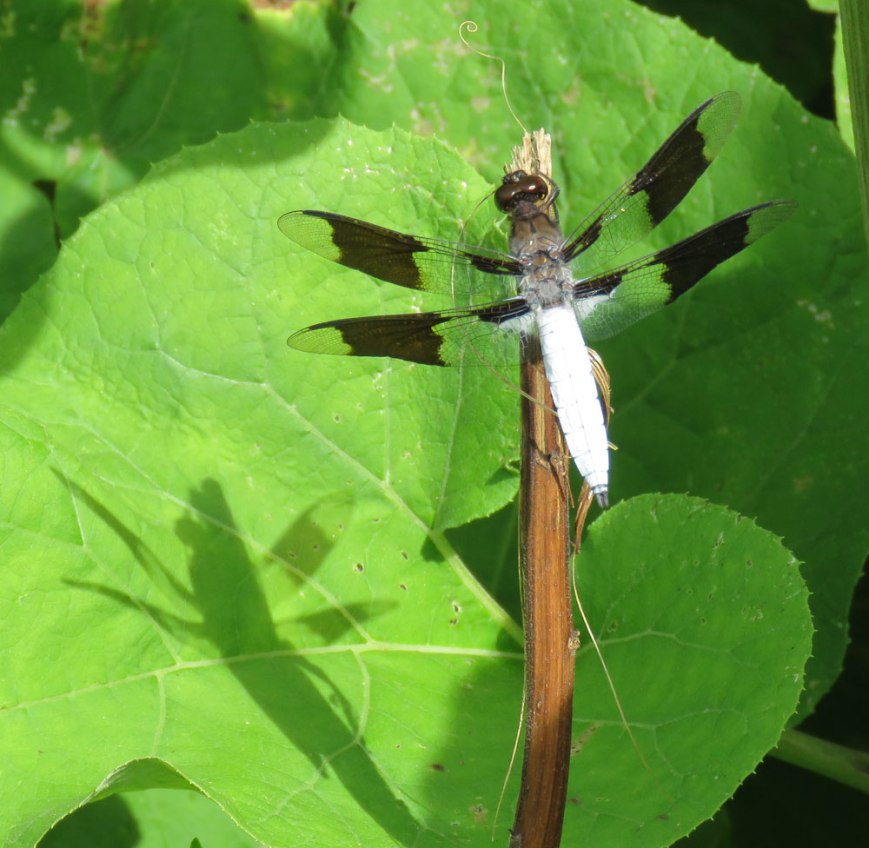
Like all dragonflies, this Common Whitetail catches and eats small insects while flying over the park. (July, 2016)
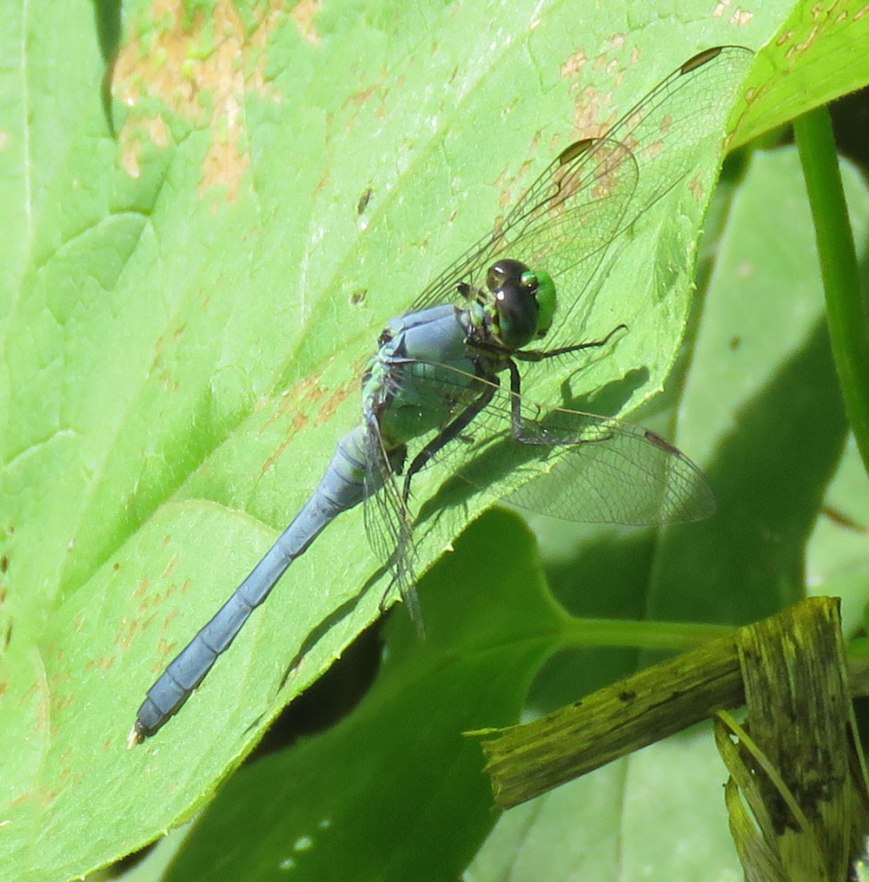
Bright blue male Eastern Pondhawk dragonflies are common at the edges of the Lily Pond during summer. (July, 2016)
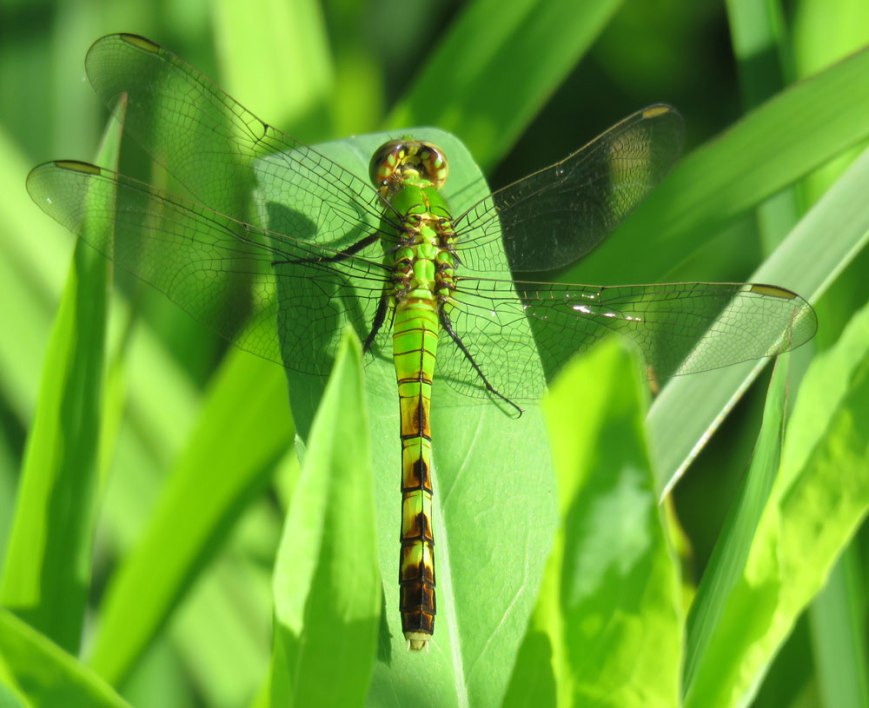
You might expect this bright green dragonfly to be a different species from the one above, but it’s really a female Eastern Pondhawk. In summer you can watch the male pondhawks court the females. Then the females lay their eggs in the Lily Pond’s shallow water.
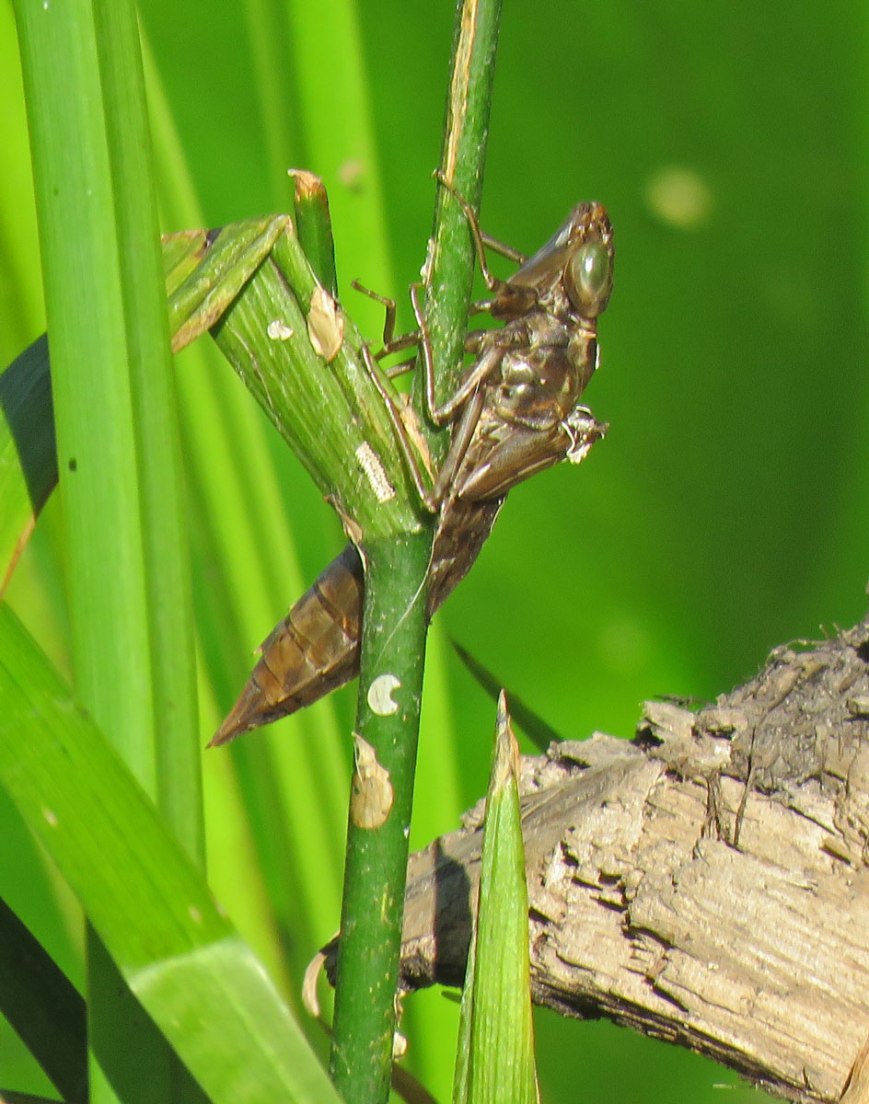
Young dragonflies grow up underwater, eating small insects and underwater worms. When they are fully grown, dragonfly nymphs crawl up a stem and out of the water. The skin on their backs splits, and the adult dragonflies emerge, inflate and dry their wings, and then take off into the sky. During summer you can find the empty skins of dragonfly nymphs at the edges of the Lily Pond and lagoons.
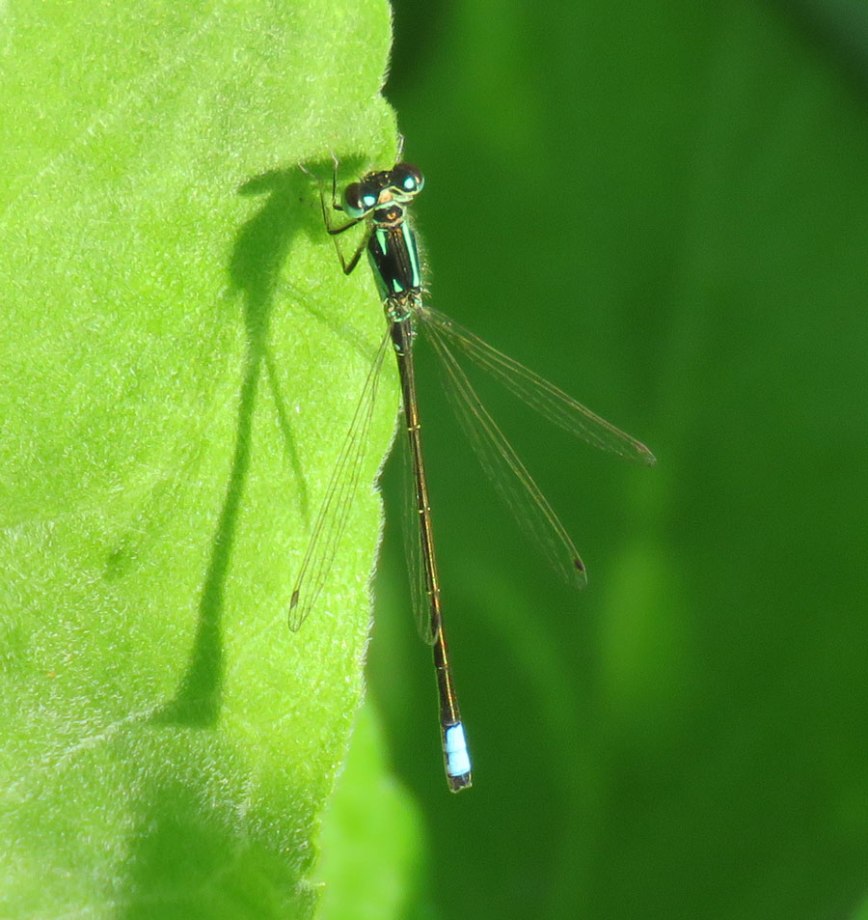
Damselflies, like this male Eastern Forktail, are small and slender cousins of dragonflies. You can see them on sunny summer days if you look carefully on plants at the edges of the sanctuary lagoon.
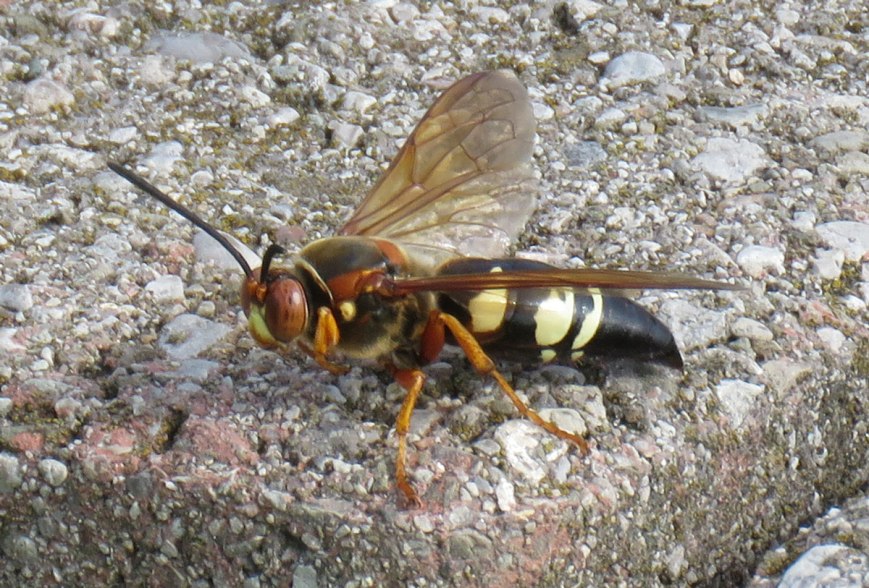
Cicada Killer Wasp on a brick on the Douglass Park mini-golf course.
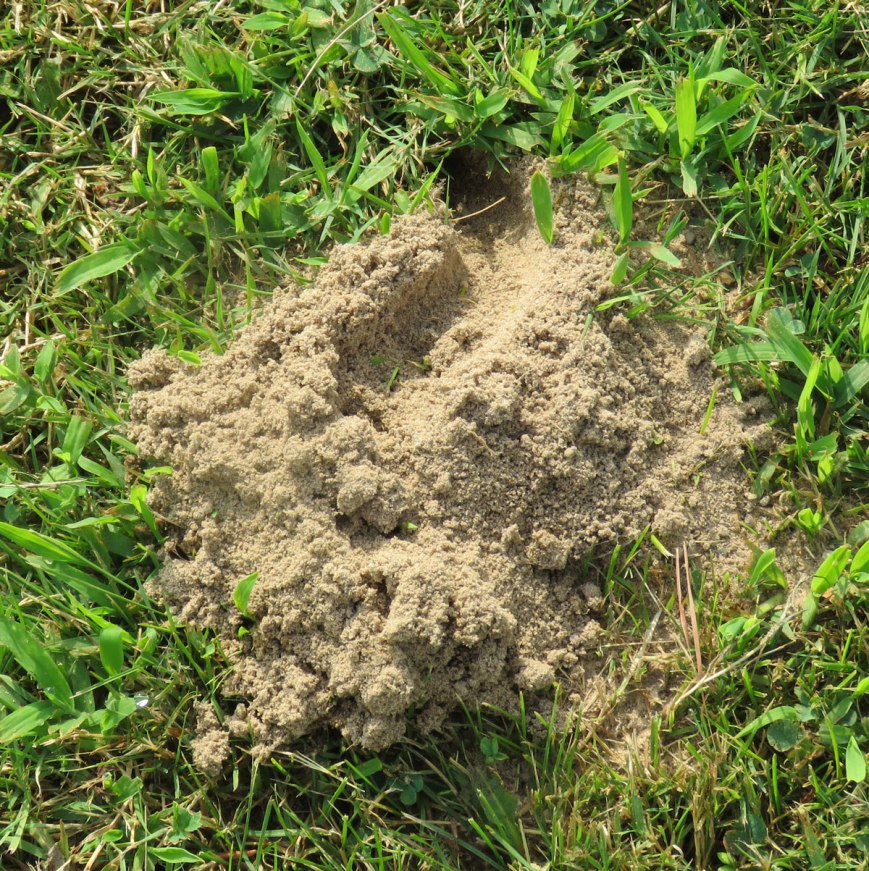
Cicada Killers dig deep burrows in the sandy soil of the mini-golf course….
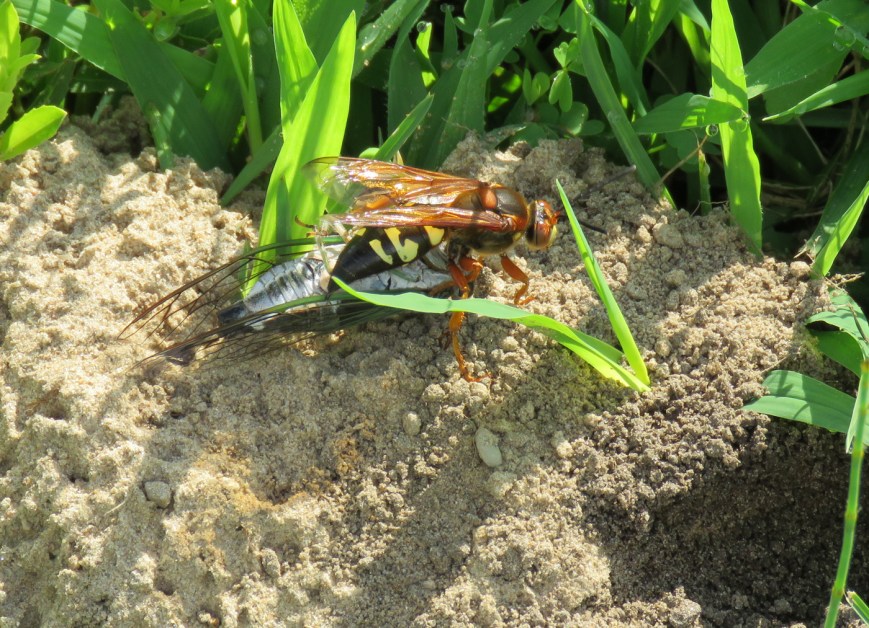
…and then Cicada Killers fly around the park in search of Annual Cicadas, which are singing in the trees that time of year. The wasps give the cicadas a special sting that keeps keeps them alive but paralyzed. Then the wasps grab hold of the cicadas and fly back their burrows. The cicadas are dragged deep underground, where they will be food for growing Cicada Killer Wasp larvae.
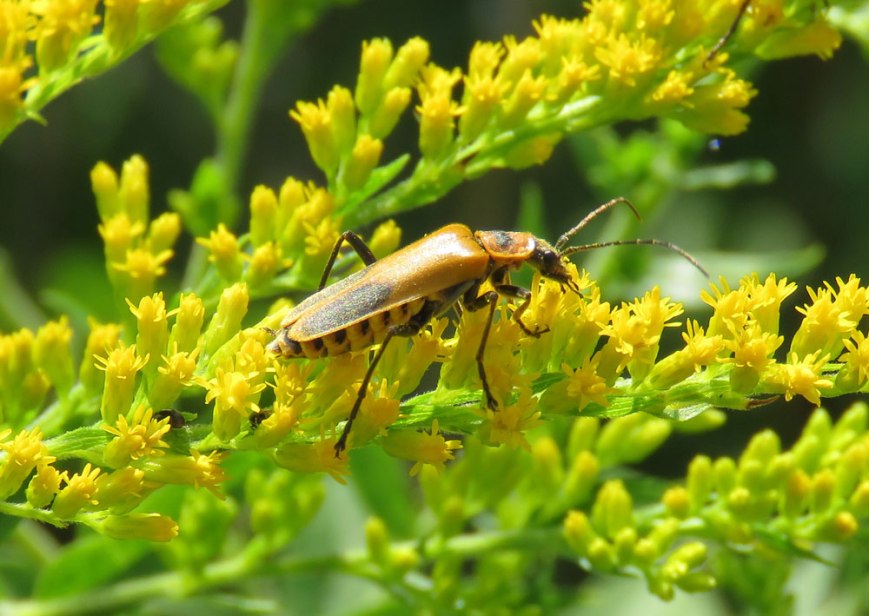
The bold yellow-and-black pattern of this Soldier Beetle might make a predator think twice about trying to eat it. (August, 2016)
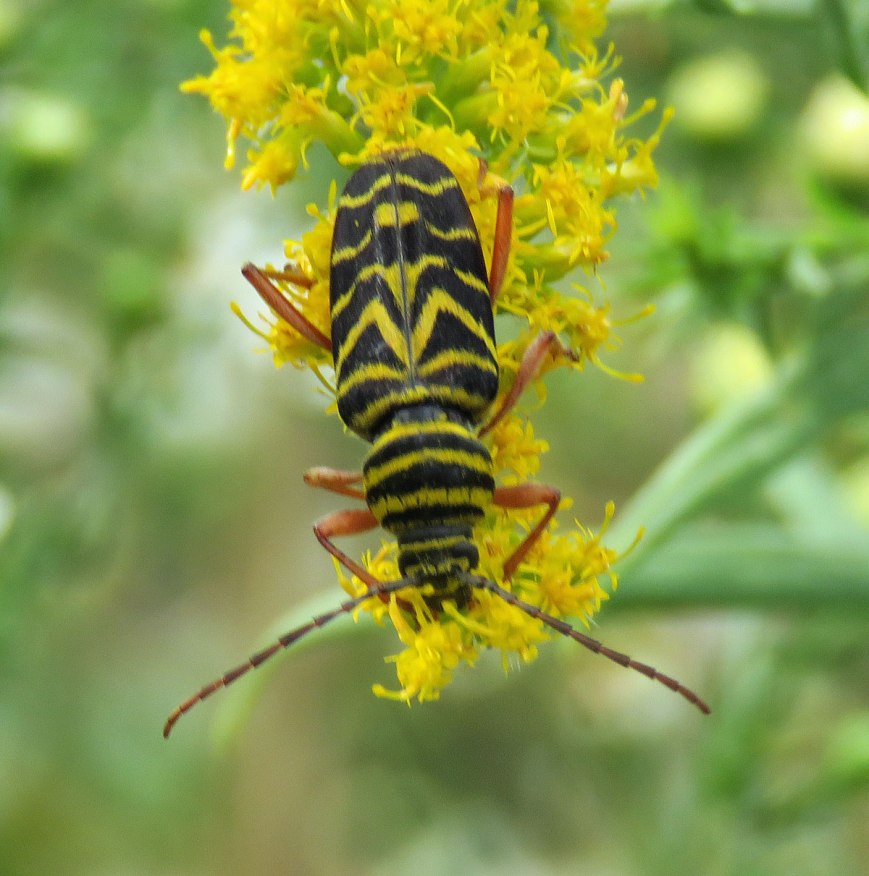
This Locust Borer longhorn beetle is also boldly patterned. It’s pattern is not an exact imitation of a bee or wasp’s appearance, but it may be enough to protect the Locust Borer from potential predators. (September, 2016)
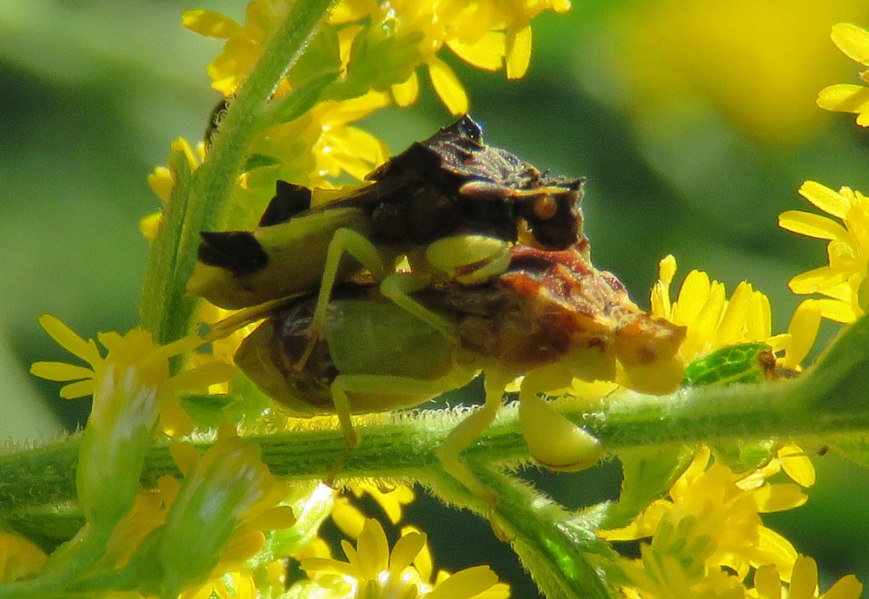
Ambush Bugs look more like pieces of flowers gone to seed. They sit still and wait on goldenrod and other flowers, then catch and eat smaller insects that get too close. (These two ambush bugs are mating). (August, 2016)
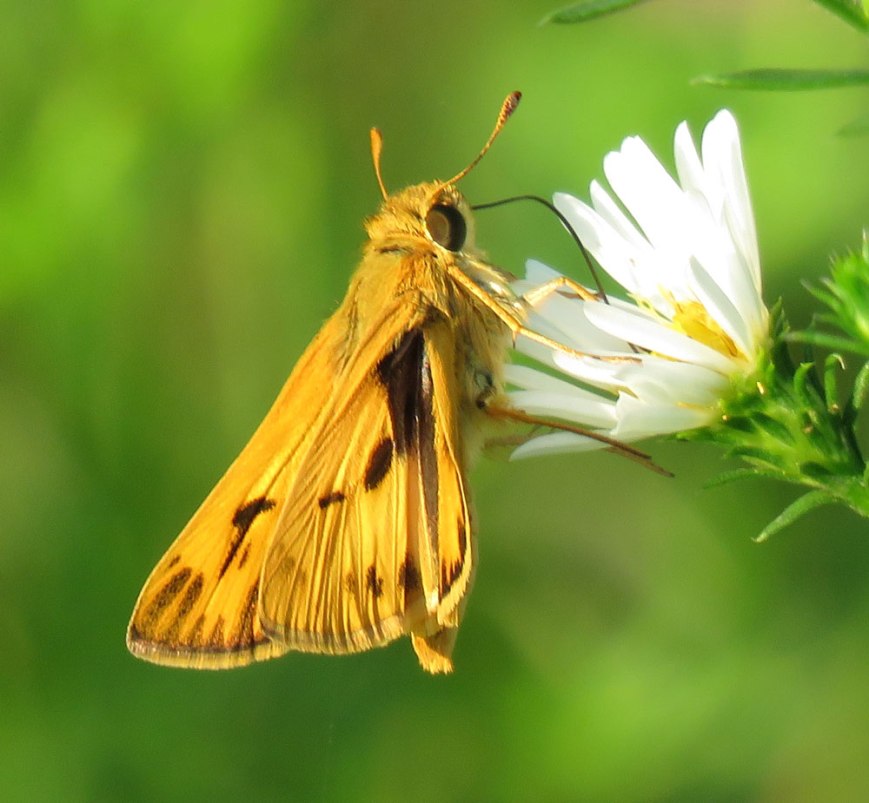
On sunny days, small Fiery Skippers sip nectar from whatever flowers remain. (August, 2016)
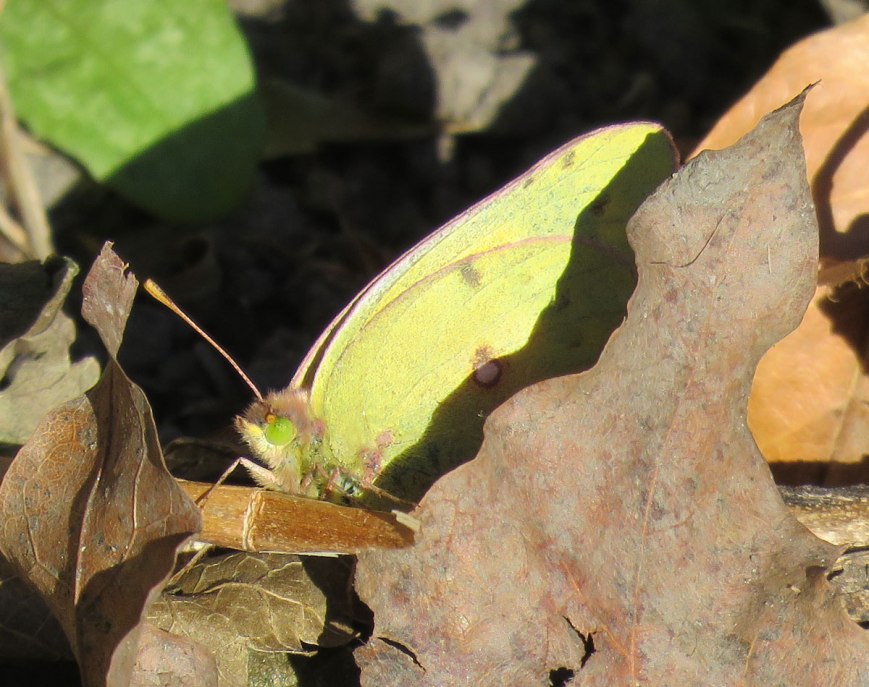
Sulfur Butterflies and other insects seek shelter on colder fall days, then emerge and fly around when the sun warms their surroundings. (November, 2016)
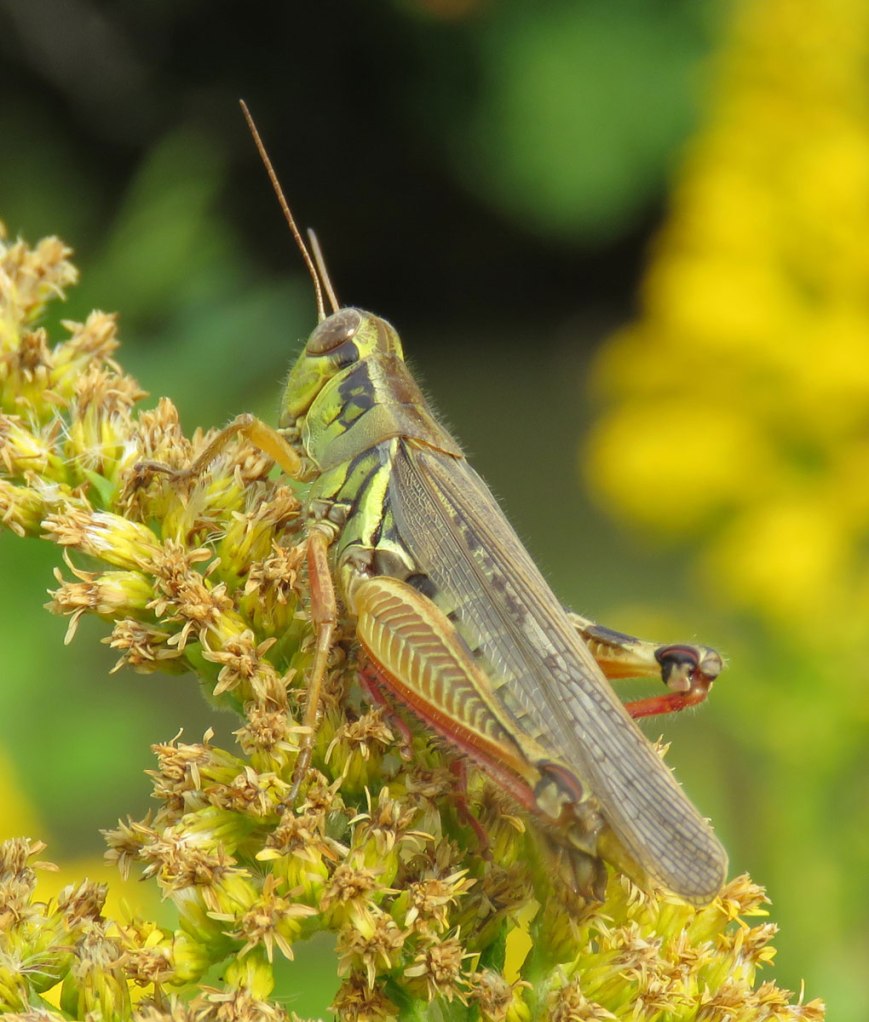
By fall most grasshoppers have wings. As you walk through the more natural parts of Douglass Park, grasshoppers leap into the air and fly off, looking a bit like temporary butterflies. (September, 2016)

If a flying grasshopper lands too close to a Chinese Mantis, neither its wings nor its powerful back legs can save it. (September, 2016)
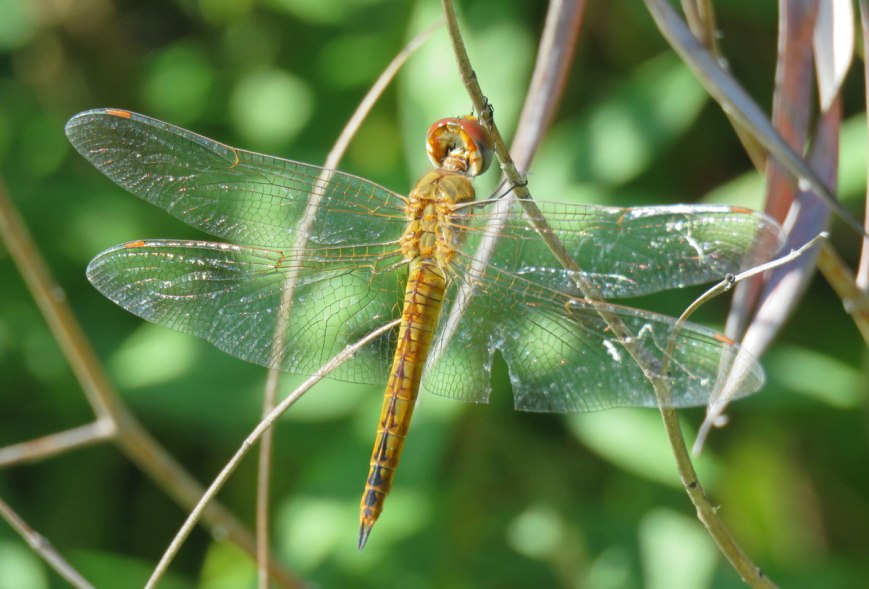
Wandering Glider at the edge of one of the sanctuary’s prairie patches. (August, 2016)
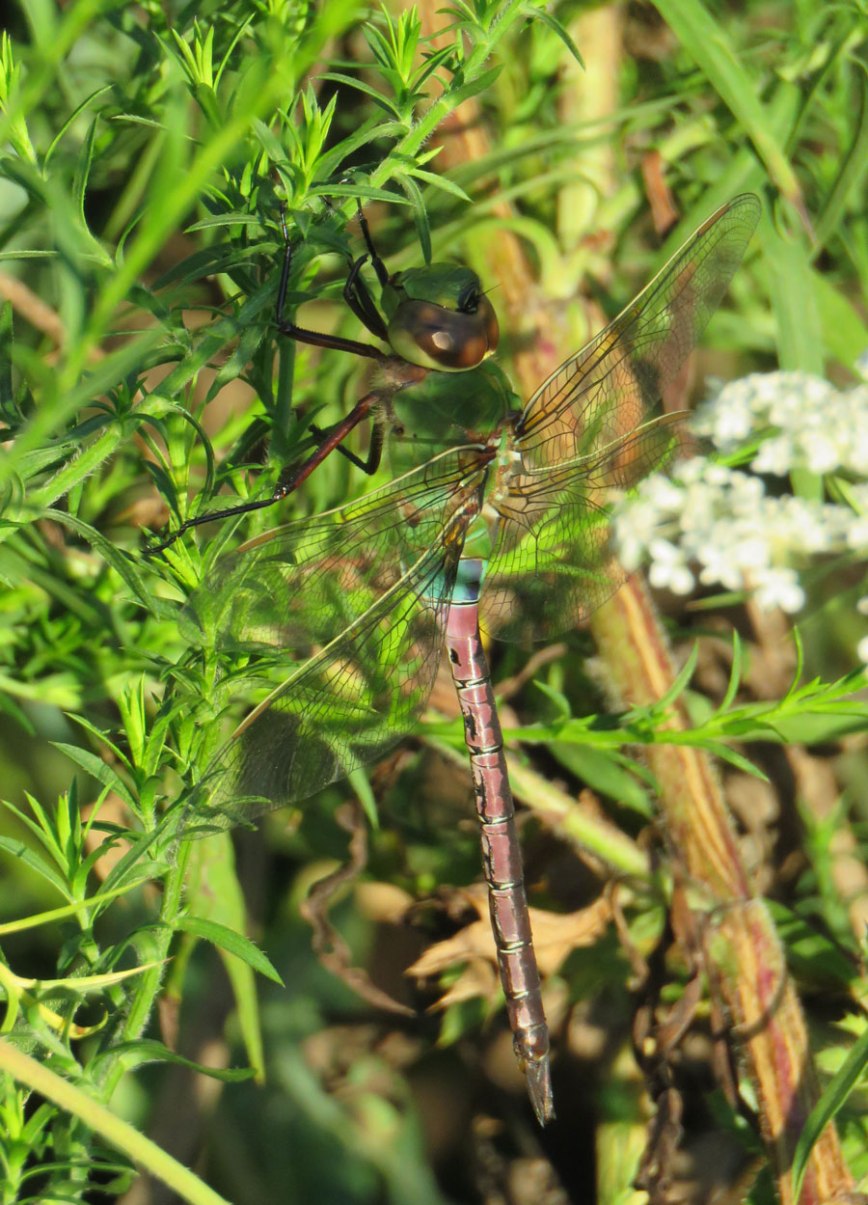
Green Darner dragonfly at the edge of the sanctuary meadow. (August, 2016)
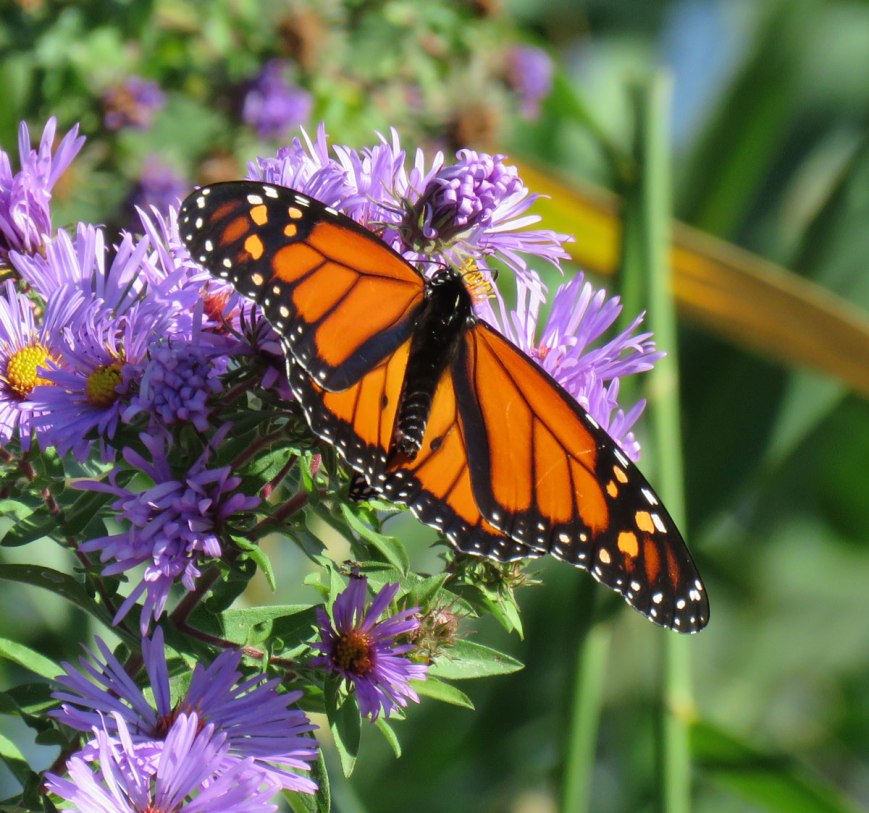
Male Monarch butterfly sipping nectar from New England Aster flowers. (October, 2016)
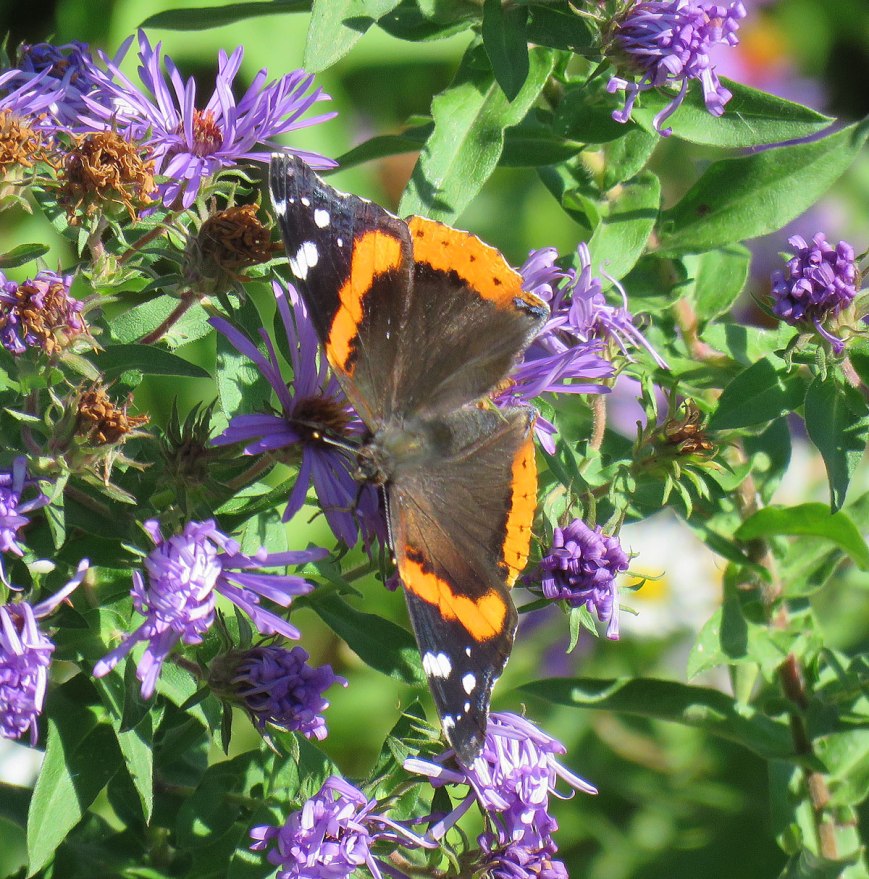
Red Admiral butterfly sipping nectar from New England Aster flowers. (October, 2016)
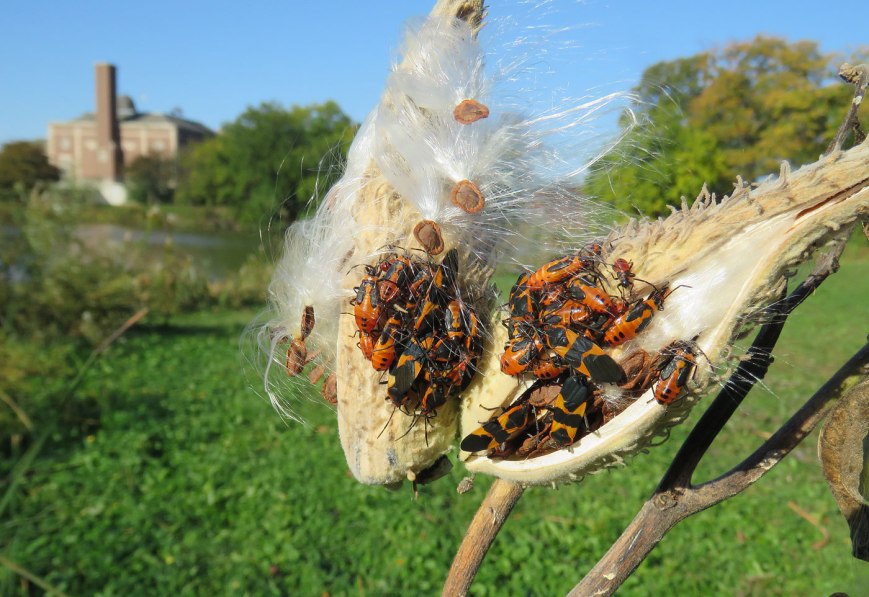
Large Milkweed Bugs on the seeds of Common Milkweed (October, 2016)
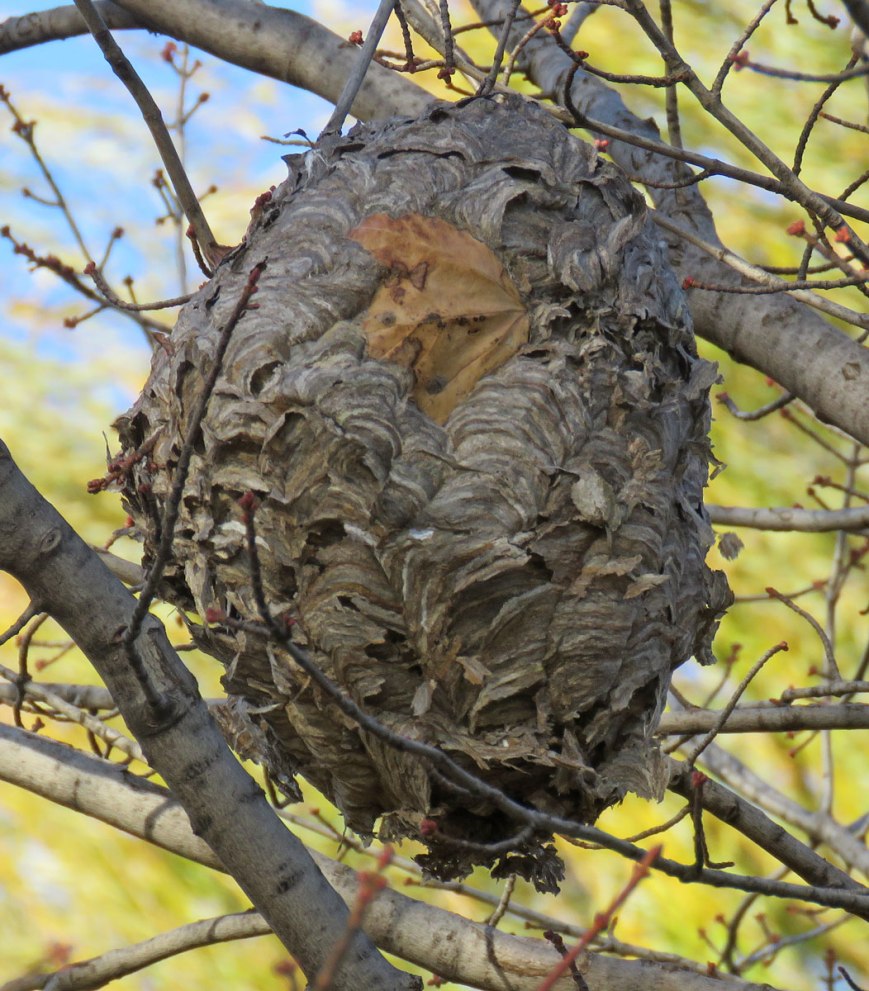
Bald-faced Hornet nests look like gray basketballs hanging in the park’s leafless trees. Next year’s queen hornets spend the winter sheltered deep in rotten wood, but the worker hornets don’t survive freezing cold. (November, 2016)
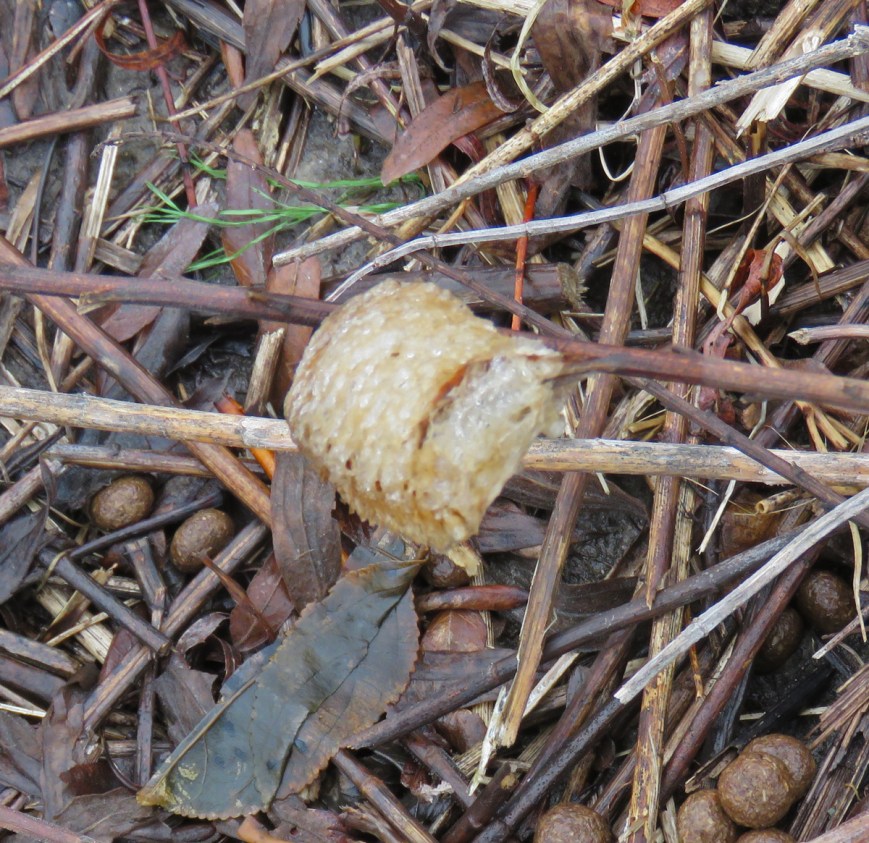
Chinese Mantis egg cases are laid on stalks and stems. The eggs survive winter’s cold, and then baby mantids hatch in late spring and early summer. (To learn more about those little brown balls among the fallen stems, go to the Mammals page and look under Cottontail Rabbit.)
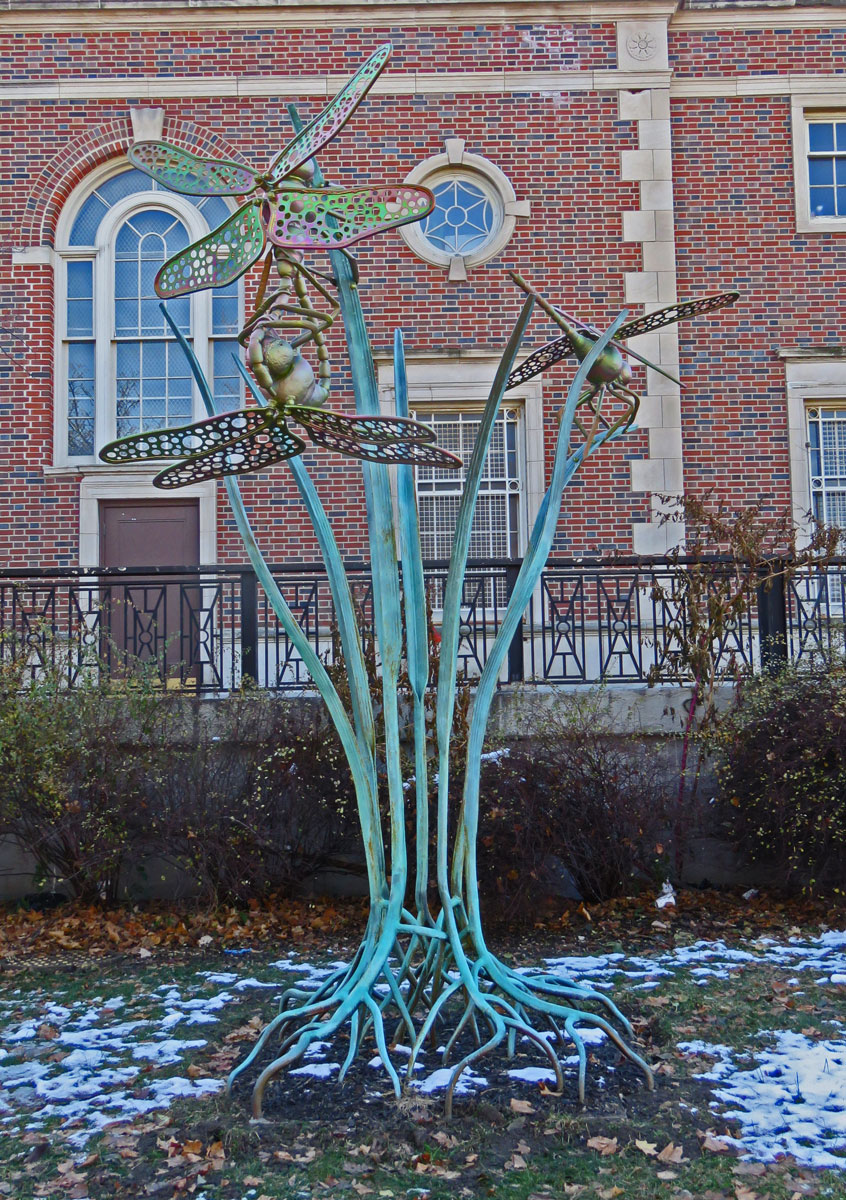
This sculpture, once front of the Douglas Park Cultural Center, is entitled “Ancient Protocol.” The artist is Paul Russell, The Chicago Blacksmith.
 Nature in Douglass Park